

The evolution of music and technology has always gone hand in hand, shaping how we create, share, and experience sound. From the early days of MP3s to today’s advanced machine learning models, data has played a key role in teaching artificial intelligence to recognize rhythm, tone, and emotion. Exploring the list of 2008 albums shows how musical variety had helped train AI to understand genres and patterns with greater precision. These innovations are now changing how we discover new songs, personalize playlists, and even compose original music. AI is not just listening; it’s learning to appreciate creativity itself.
The Digital Revolution That Set the Stage

Before streaming platforms and cloud storage, MP3s changed how people interacted with music. They made songs portable and, more importantly, standardized audio data into a format machines could study. Every beat, pitch, and waveform became a data point, allowing researchers to analyze how sound behaves. This transformation gave scientists and developers the chance to teach computers to recognize musical patterns that listeners often interpret instinctively. What began as a way to store more songs on smaller devices eventually became the foundation for teaching AI how to understand the science behind melody and emotion. As computing power advanced, algorithms learned to identify individual instruments and even detect vocal subtleties. Machines began distinguishing between acoustic and electronic sounds and could estimate mood based on tempo and tone. This new capability turned digital data into a musical language that computers could study and, eventually, reproduce in creative forms.
How Machine Learning Found Its Rhythm

Machine learning revolutionized the way computers interpret audio. By training models with thousands of hours of songs, developers enabled AI to detect rhythm, genre, and emotional context. Each sound sample became a mathematical pattern that helped systems identify what makes a jazz riff different from a rock solo. The process was repetitive but effective, allowing algorithms to listen, learn, and predict musical qualities with impressive accuracy.
Over time, AI systems like OpenAI’s Jukebox and Google’s Magenta demonstrated that machines could move beyond analysis to creation. They started composing original music inspired by existing styles, blending patterns to produce something entirely new. It was as if machines had discovered rhythm, learning from human expression and returning it in digital form. This evolution marked a turning point, showing that creativity could be shared between human intuition and computational precision.
The Future of AI and Human Collaboration in Music
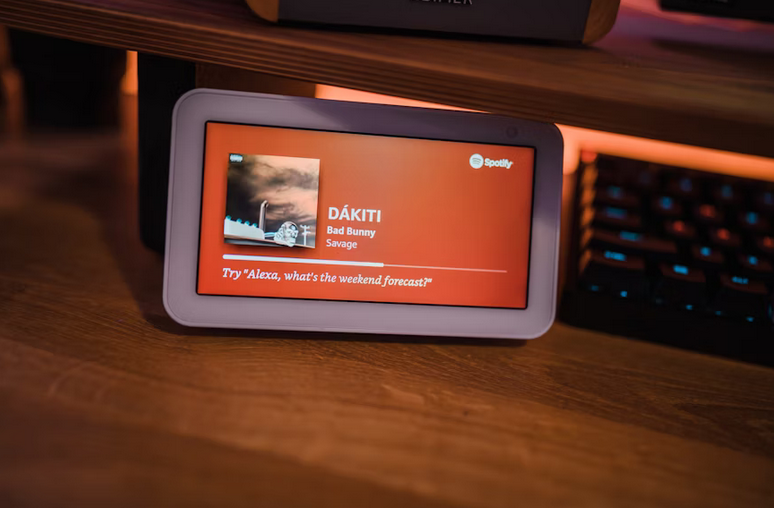
The partnership between artists and AI continues to shape music’s next chapter. Producers use intelligent tools to explore sounds faster, refine mixes, and experiment with melodies they might never have found alone. Listeners benefit too, with platforms that recommend songs matching their tastes or current moods. The bond between creativity and technology grows stronger as AI becomes a true collaborator, offering inspiration instead of imitation. However, while AI can analyze and compose, it still lacks the raw emotion behind a human voice or the lived experience that inspires lyrics. What it provides instead is a new instrument, a creative partner that extends artistic possibility. Together, humans and machines are redefining how sound is made, shared, and felt.
Music has always been a reflection of human emotion, and AI’s involvement doesn’t change that; it amplifies it. From the earliest MP3s to sophisticated learning models, data has taught machines how to listen, interpret, and create. Yet, the human touch remains the heart of every song. Technology may provide the rhythm, but emotion still writes the melody. As music continues to evolve through innovation, one truth stands firm: AI can listen and learn, but it’s humanity that gives music its soul.…


 Easy navigation